The Real Jacopone
Admired, Cancelled and Rediscovered : The true story of Jacopone da Todi, c1270-2024. Part 2: Cancelled (c1590-1900)
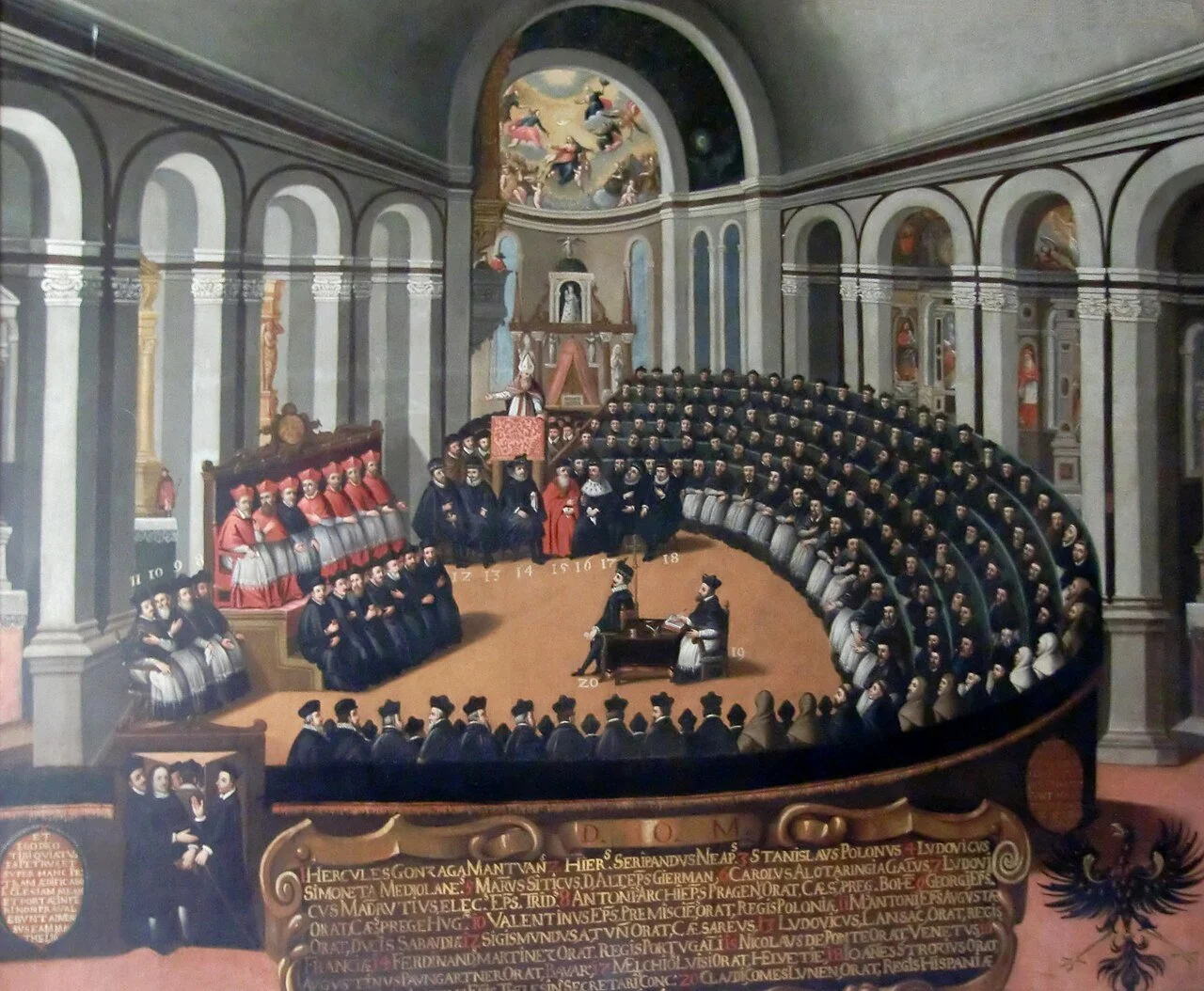
For over three centuries after his death, Jacopone was admired and his laudi were highly regarded, both as religious poetry/songs and as texts for spiritual formation. This situation changed dramatically during the tumultuous 1500s, the period of the Protestant Reformation and the subsequent Catholic Counter-Reformation. Another period of over three centuries followed, from end of the 1500s to the beginning of the 1900s, that was the darkest hour in the story of Jacopone: the axe of the Counter-Reformation fell on his writing and the Curias of Rome and Todi sought to obliterate his memory.
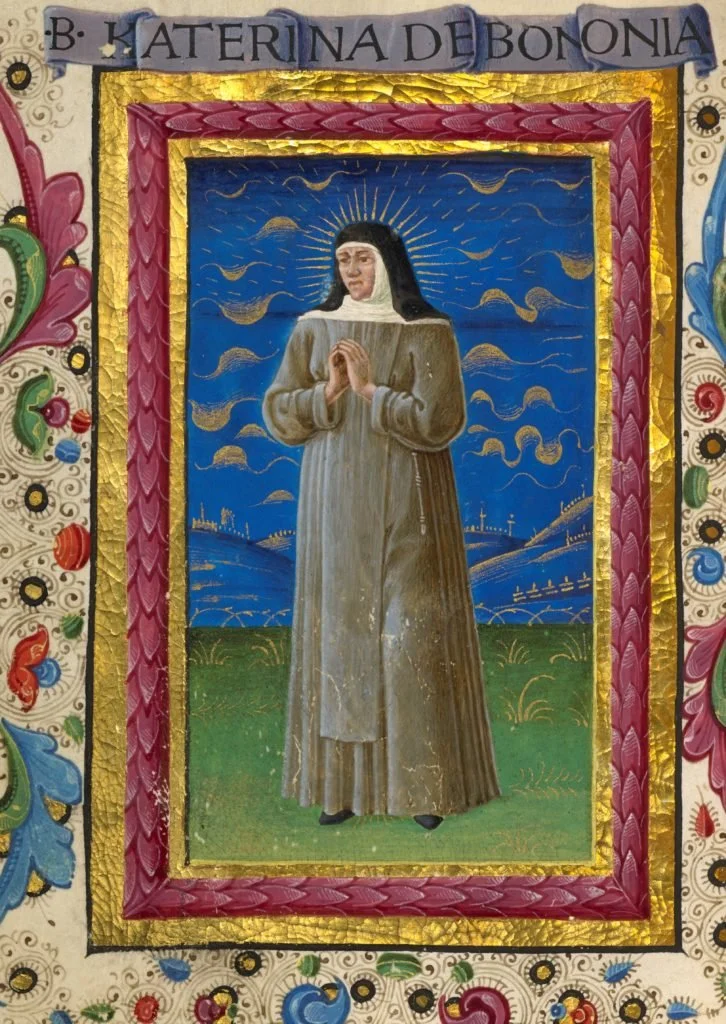
Saint Catherine of Bologna (1413–1463)
In our last Newsletter we highlighted the many major figures in the Late Middle Ages who admired Jacopone and used his poetry for spiritual instruction. Since the Newsletter was published we have been able to add another figure to this list: Saint Catherine of Bologna (1413–1463).
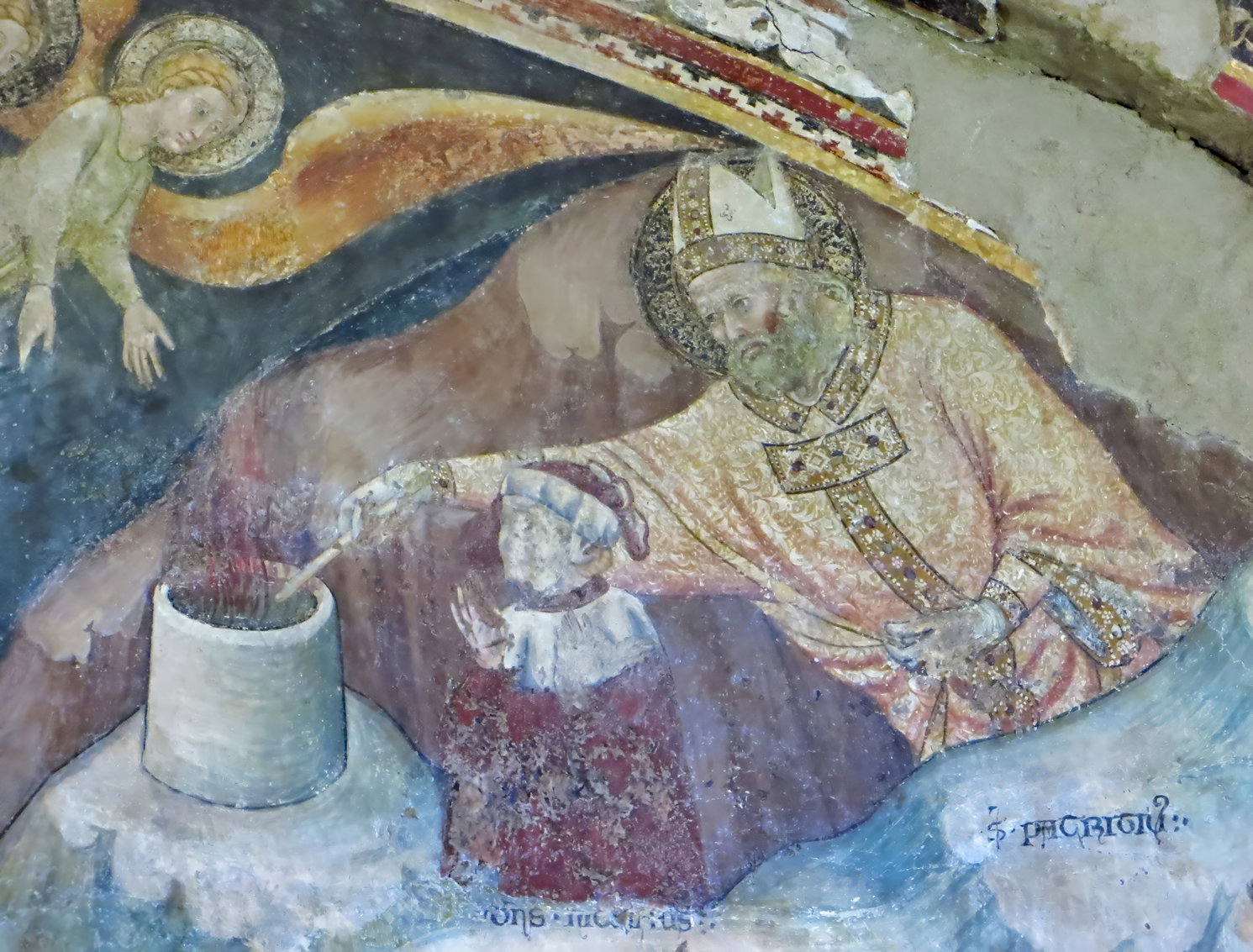
Patrick and Jacopone
At this time of year the figure of St Patrick features very largely in Ireland. St Patrick’s Day (17 March) is not just the religious feast of a saint – it’s also Ireland’s national holiday, the focus of a major festival and a worldwide celebration of Irishness. But this year I have found myself thinking about the comparison between Patrick and Jacopone da Todi.

Admired, Cancelled and Rediscovered: The true story of Jacopone da Todi, c1270-2024. Part 1
This is the story of Jacopone, not just in his lifetime but over the seven centuries since his death. We call it the ‘true story’ of Jacopone because it is based on documented facts (nothing invented), including a lot of forgotten or suppressed information. In some ways it’s like reconstructing a jigsaw, having found all the missing pieces.
Our story is divided into three periods titled Admired (c1270-1590), Cancelled (c1590-1900) and Rediscovered (1900-2024).
Ten Missing Years
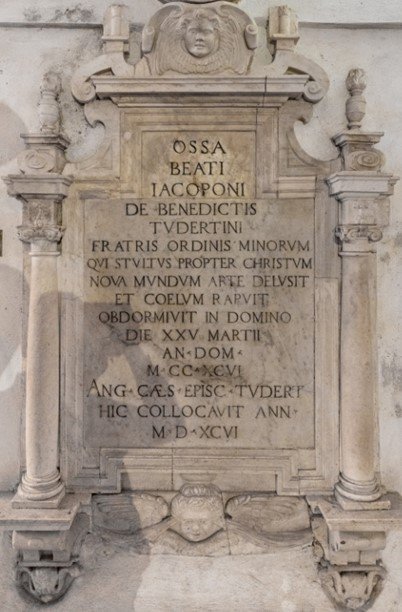
Beneath the high altar of the church of San Fortunato in Todi is a crypt containing a large and elaborate marble tomb, constructed in 1596 on the orders of Bishop Angelo Cesi to house the relics of five early “patron saints” of Todi (Fortunatus, Callistus, Cassian, Romana and Degna). Shortly afterwards, Bishop Cesi also had the remains of Jacopone moved into the crypt, and a new monument placed on the wall.
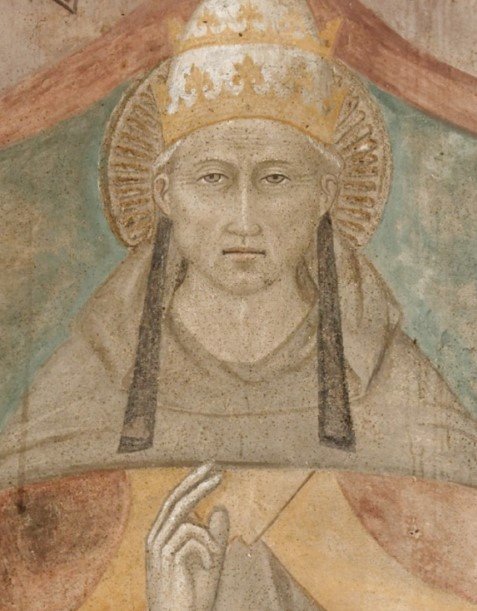
Franciscan Poverty
Francis of Assisi wanted to imitate Jesus, who had “nowhere to lay his head” (Luke 9:58) and instructed his disciples to “take nothing for the journey” (Luke 9:1-5). Francis never built a church or monastery. He and his followers based themselves at the little church of the Porziuncola (‘little portion’) outside Assisi, but lived in crude wooden huts around the church. They owned no property and lived on whatever food and shelter they were offered by the people they ministered to.
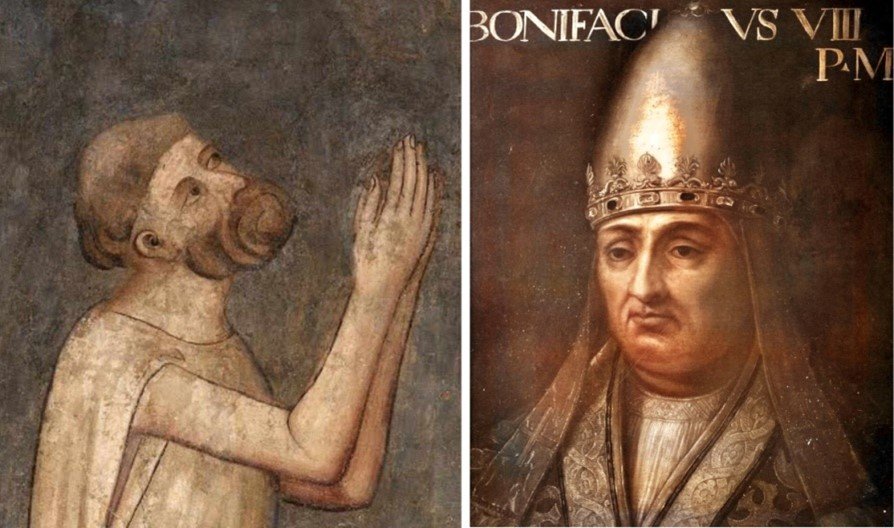
The Great Dispute: Jacopone and Boniface VIII
After ten years as a lay Franciscan, Jacopone had joined the main Franciscan Order of Friars Minor around 1278. The Todi friars were definitely Conventual (pragmatic about the rule of poverty), although their friary was not then as grand as it would later become. Jacopone’s time there coincided with the first steps toward the later construction of the magnificent church and convent of San Fortunato that still dominates the urban landscape of Todi.