In our last Newsletter we highlighted the many major figures in the Late Middle Ages who admired Jacopone and used his poetry for spiritual instruction. Since the Newsletter was published we have been able to add another figure to this list: Saint Catherine of Bologna (1413–1463).
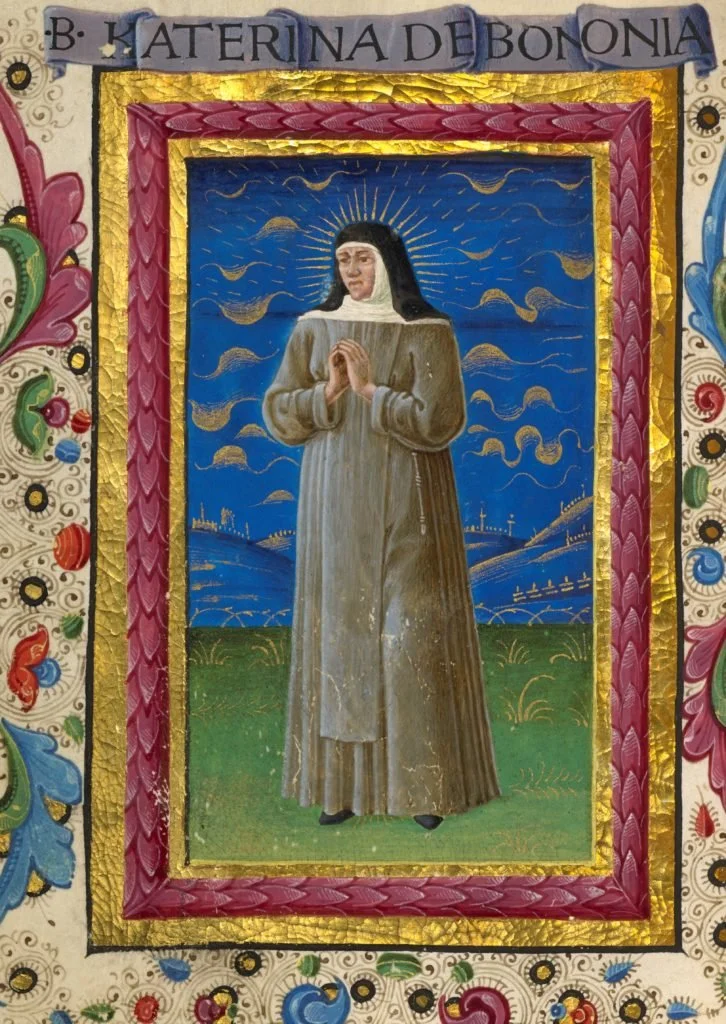
Catherine of Bologna
Guglielmo Giraldi, Saint Catherine of Bologna, c.1469. [Getty Center, Public domain, via Wikimedia Commons].
Saint Catherine of Bologna (Caterina Vigri, 1413–1463) was one of the most important Italian religious women of the 15th century. A Poor Clare sister, she was also a painter, writer and musician – a woman “who was able to unite spirituality, intellect, and art in a life experience that proved profoundly innovative for hundreds of other women”. She has been described as
a paradoxical combination of pragmatic abbess, inspired musician, and devout painter, as well as a passionate mystic and a visionary writer whose works were read by the Clarisse throughout Italy … a principal figure in the renaissance of the Poor Clares during the fifteenth century.
In 1456 she founded a convent of Poor Clares in Bologna that became “an extraordinary female community of literary and artistic production” and a famous spiritual and intellectual center in northern Italy. She was canonized in 1712 and is the co-patron saint (with Saint Petronius) of the city of Bologna – where she is referred to simply as “the Saint (la Santa)”.
Caterina greatly admired Jacopone and his laudi. She quotes several of his verses in her most famous literary work, Le sette armi spirituali (‘The seven spiritual weapons’), although without explicitly naming him. Instead, one stanza is introduced with the phrase “as it is written (così come è scritto)” – almost as if Caterina was quoting Scripture! This work was written primarily for the instruction of young novices in the convent and it is very likely that Caterina used Jacopone’s writings extensively in the spiritual formation of her sisters. She also composed several laudi herself, almost certainly inspired by Jacopone’s poetry.
Caterina’s legacy outlasted her death, and the convent she founded in Bologna produced an important work, the Devotissime compositioni rhythmice, published in Bologna in 1536. This is an anthology of laudi composed by one or more nuns between the late 1400s and early 1500s, characterized by their tender and passionate mystical spirituality. A recent scholarly study of these laudi highlights in influence of Jacopone: “the echoes of the Jacoponic tradition, both authentic and apocryphal, recur in them, abundantly and ubiquitously”. The same study summarises Jacopone’s influence at this period as follows:
The success of Jacopone's laude … as tools for meditation and spiritual development, elevates Jacopone to the level of a master of mystical love.
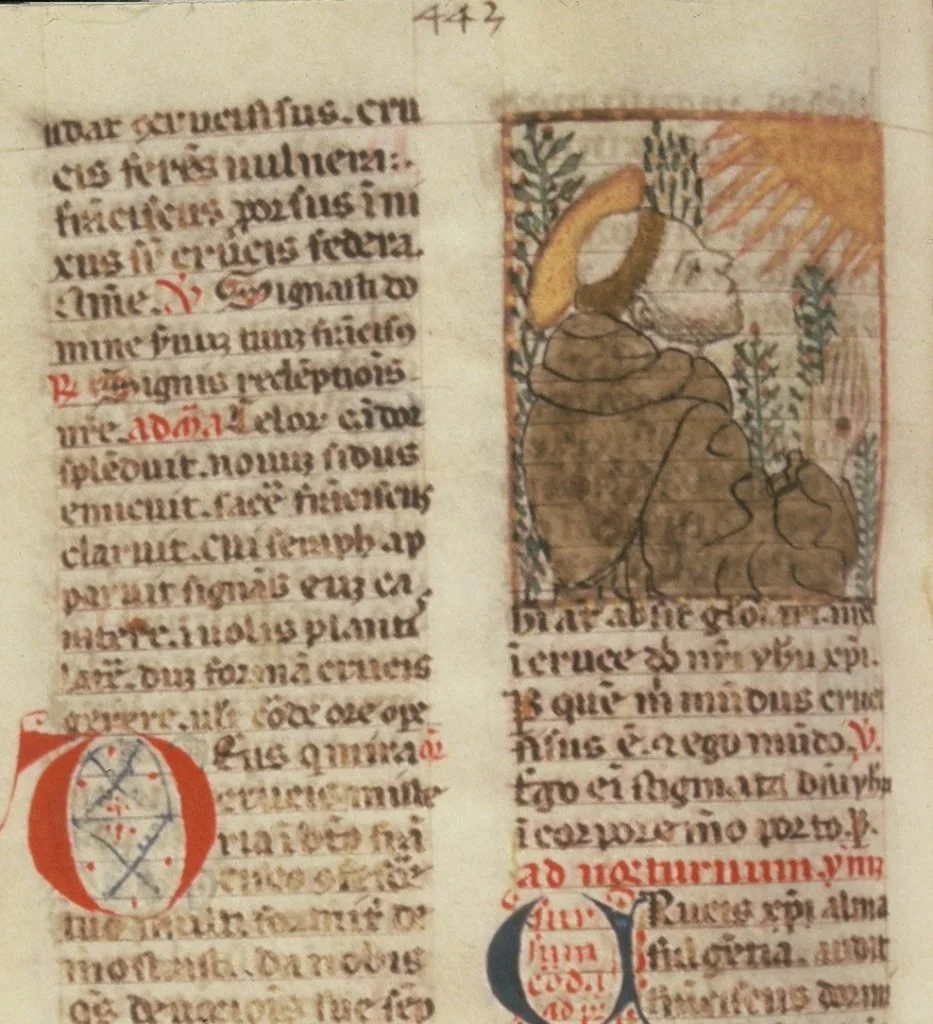
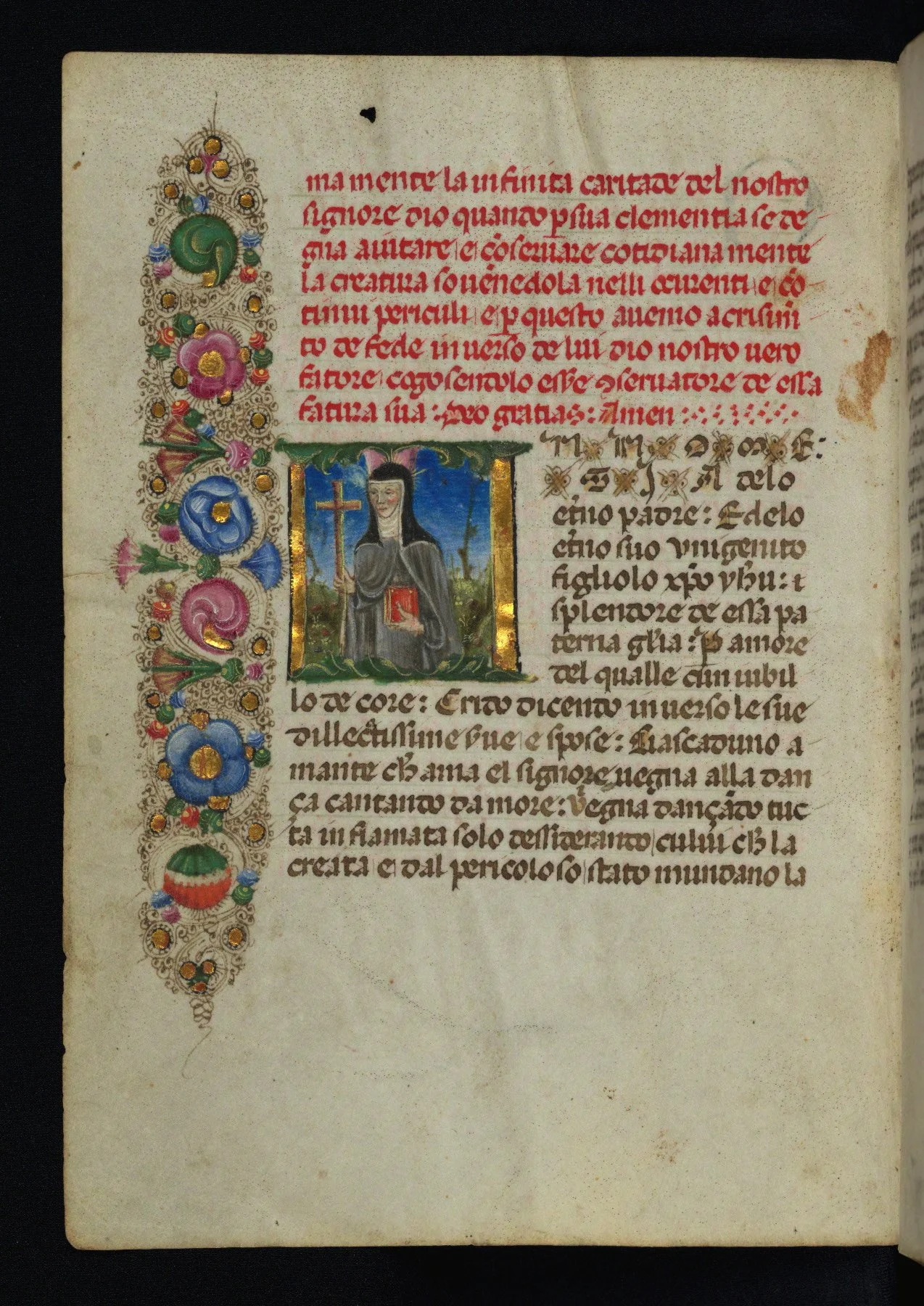
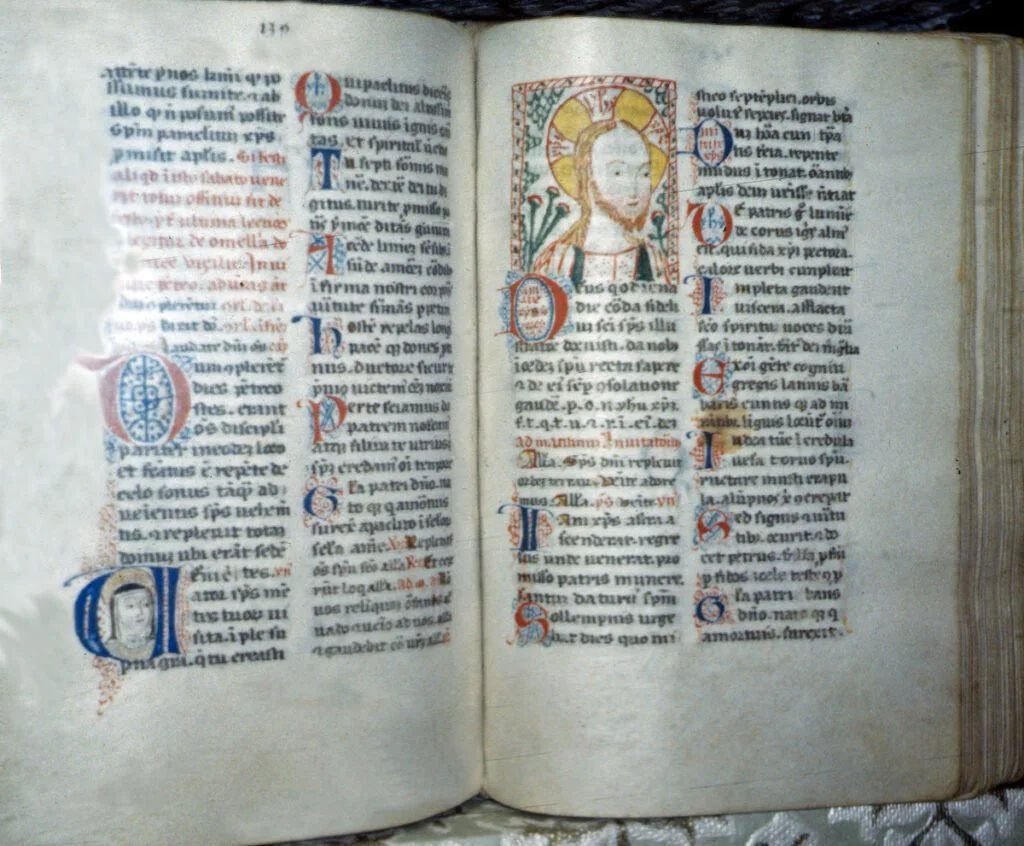
Saint Catherine of Bologna, drawing of Francis of Assisi, in her Breviary, preserved in the Convent of Corpus Domini in Bologna. [Public domain, via Professor Kathleen G. Arthur].