Patrick and Jacopone
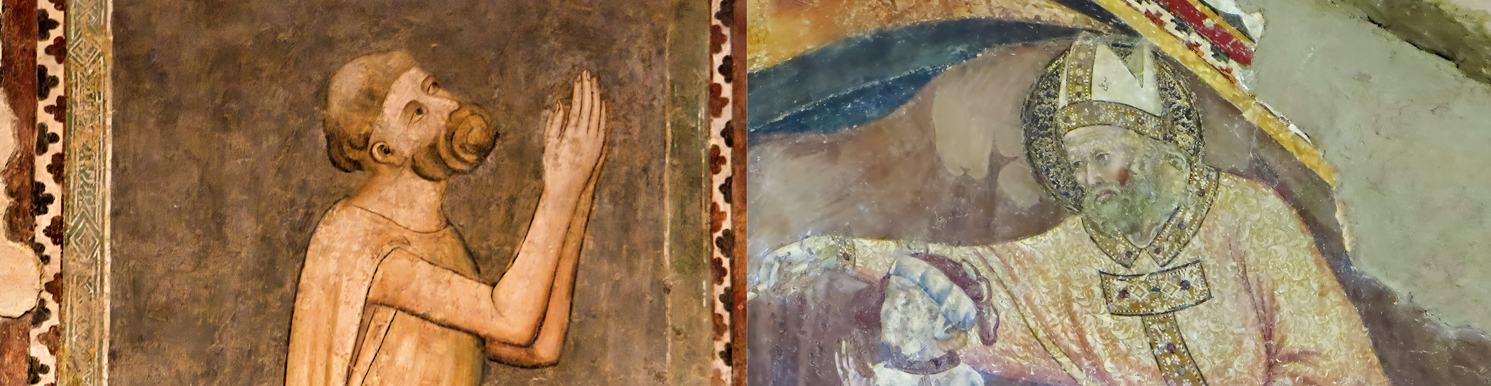
At this time of year the figure of St Patrick features very largely in Ireland. St Patrick’s Day (17 March) is not just the religious feast of a saint – it’s also Ireland’s national holiday, the focus of a major festival and a worldwide celebration of Irishness. But this year I have found myself thinking about the comparison between Patrick and Jacopone da Todi.
What have they in common? Both are real people who became legends. Patrick was transformed into a heroic wonder-worker, battling kings, demons and pagan deities. And, of course, banishing the snakes out of Ireland! Jacopone was not so lucky – he became a dour, angry extremist, a half-mad fanatic doing crazy things on the streets and piazzas of Todi. But what they really have in common is this: in both cases the real person, the true story, is far more interesting than the legend!
Patrick is, literally, the beginning of Irish history. His voice, the first voice ever recorded on the island, brings Ireland out of prehistory and into history. More importantly, it still has the ring of an authentic human life:
Ego Patricius peccator rusticissimus et minimus omnium fidelium et contemptibilissimus apud plurimos
My name is Patrick... I am a sinner, a simple country person, and the least of all believers. I am looked down upon by many.
The real Patrick tells a remarkable (and highly contemporary) story: Kidnapped as a teenager; trafficked into Ireland as an illegal migrant; forced into slavery for many years. But during this time his nominal faith comes to life, as he encounters the living God in a land of darkness. After an extraordinary escape and return to his family, the real miracle happens – Patrick hears “the voice of the Irish” in a dream, begging him to return to them.
And, remarkably, he did return to that dark and barbarous land, to the people who had enslaved and abused him and, as far as we know, spent the rest of his life there. He later became known as the “Apostle of the Irish”, but the truth is we know almost nothing about his later life and how he earned that title. He lived and died mostly in obscurity – but to anyone familiar with how God works, Patrick’s real, human life has all the marks of the Spirit of God at work.
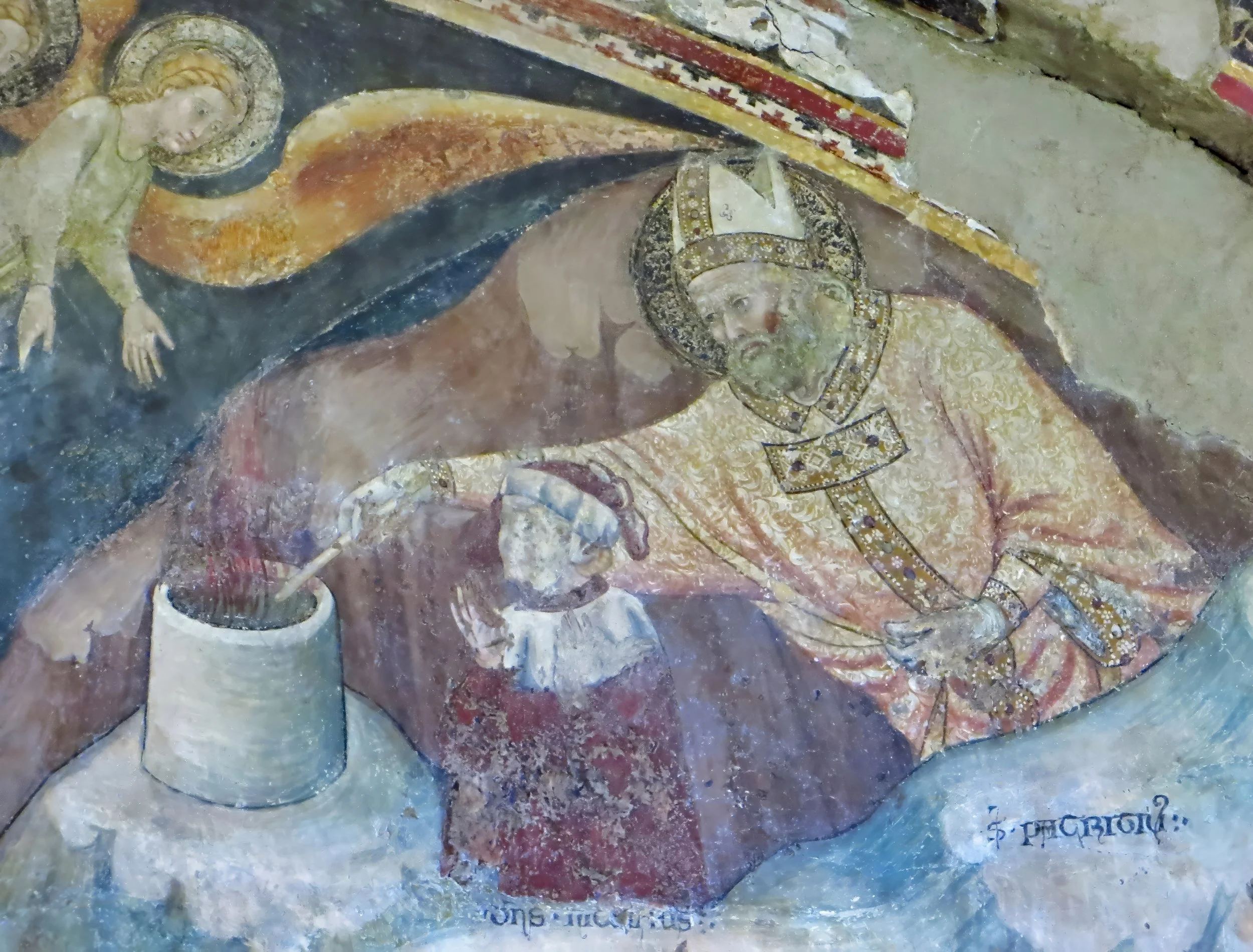
St Patrick in Todi: One of the most important, but little-known artistic treasures of Todi is a fresco of the 1340s (by an unknown artist) in the Poor Clares’ convent in the Borgo Nuovo. A graphic depiction of the legendary ‘Purgatory of St Patrick’ in Ireland, it includes this image of Patrick himself, dressed in the robes of a bishop.
In many ways Jacopone’s story is more difficult to tell, because so much that we think we know about him is unlikely to be true. But the basic facts are clear – as a successful, educated professional man, he experienced a conversion that led him to abandon his career, his wealth and his place in society in order to follow Jesus in poverty. Later joining the Franciscan order, he became a respected teacher but also an uncompromising advocate for Francis’ original vision of radical poverty. This led him into a disastrous conflict with Pope Boniface VIII, resulting in excommunication and harsh imprisonment, lasting almost to the end of his life.
But the real story of Jacopone’s life, beyond the bare biographical details, is told in his poetry. It’s the story of an inner life, unfolding over nearly forty years, focussed on the pursuit of God and on making his own heart big enough to be a dwelling-place for God. Jacopone’s poetry explains the essentials of his spiritual journey, realistically and in detail – in a way that few others have ever done. Before the end of his life he could give a remarkable testimony to how God had transformed him, from the inside:
Sopr’onne lengua Amore, bontà senza figura,
lume for de mesura, resplende nel mio core.
Love beyond all telling, indescribable goodness,
light of infinite intensity shines in my heart.
This is the irony – the true stories and the real figures of Patrick and Jacopone are far more interesting, precisely because they are true and real, than the myths and legends that later grew up around them. What a pity that many people still know only the legends and not the real figures!